


Description
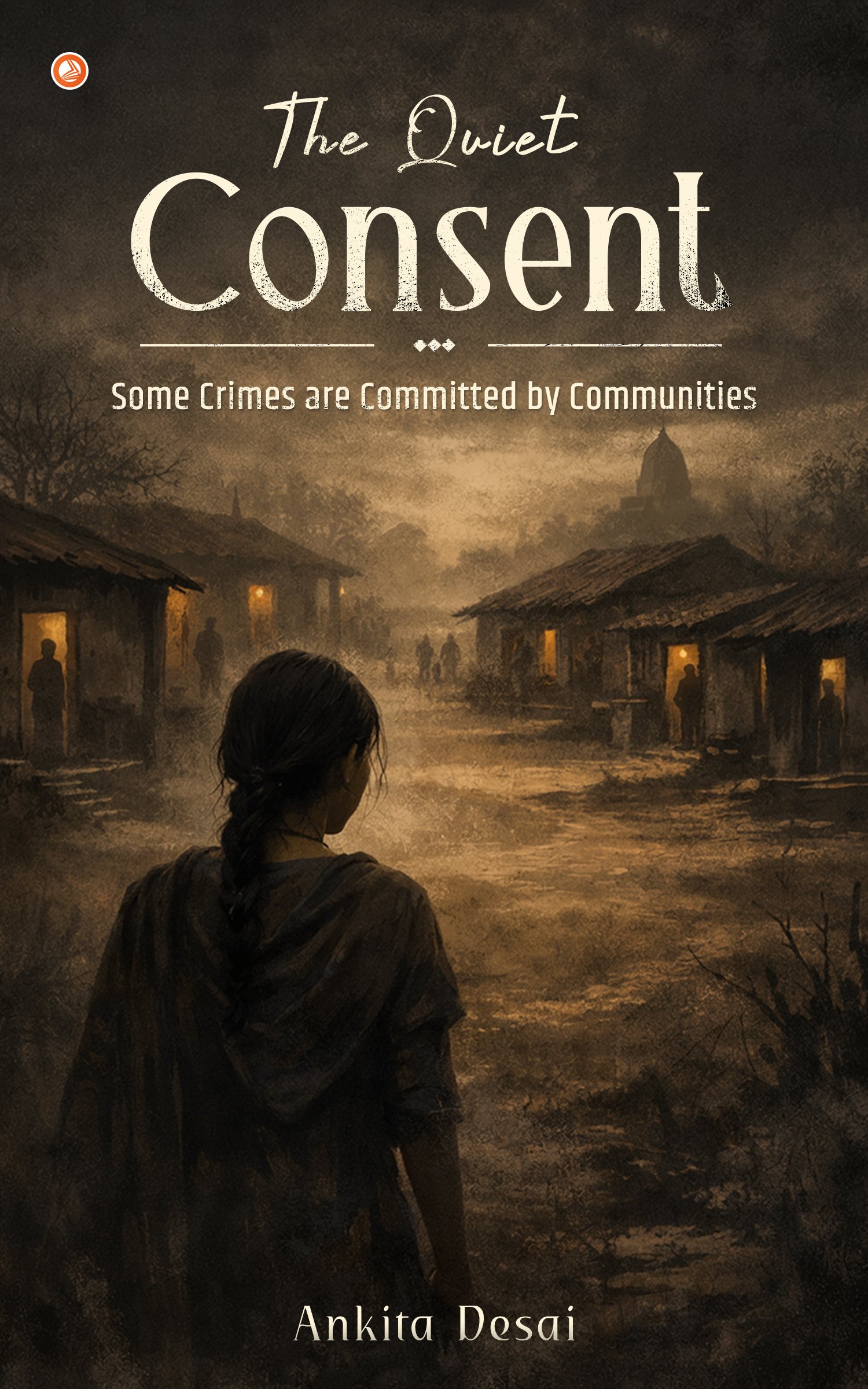
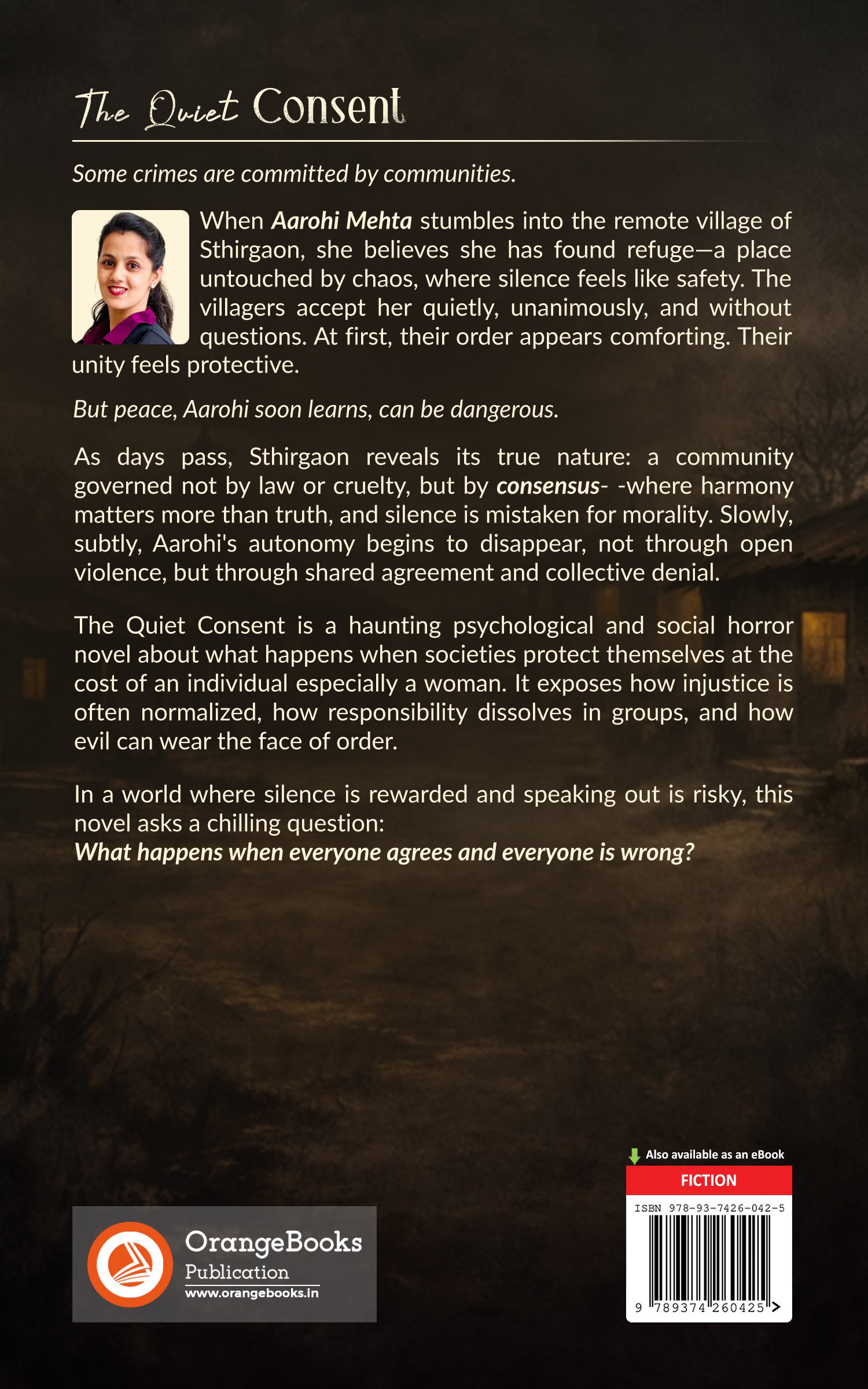
The Quiet Consent is a psychological and social horror novel that explores how violence does not always arrive loudly. Sometimes, it arrives through silence, agreement, and the collective decision to look away. The story follows Aarohi Mehta, a young woman who seeks refuge in a seemingly peaceful village called Sthirgaon after fleeing an unnamed past. What begins as an act of communal acceptance slowly reveals itself as something far more dangerous. The true antagonist of the novel is not a single individual, but a system—a village bound by consensus, tradition, and fear of disruption. Alongside Aarohi stands Devraj Kaal, a man shaped by obedience and survival, whose moral failure lies not in cruelty but in compliance. In today’s world, The Quiet Consent resonates deeply. Across societies, institutions, workplaces, families, and communities, we continue to witness injustice enabled not by a few evil actors, but by many silent ones. The novel reflects how women’s suffering is often managed, minimized, or absorbed in the name of harmony, reputation, or “the greater good.” Aarohi’s transformation from victim to lingering presence is symbolic of truth itself—what is suppressed does not disappear; it waits.



Reviews
There are no reviews yet.