
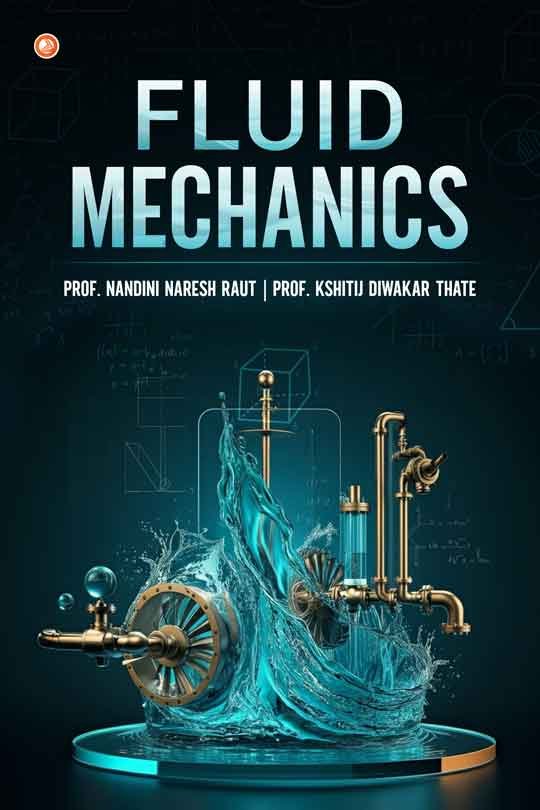
Introduction to Fluid Mechanics is a mathematically efficient introductory text for a basal course in mechanical engineering. More rigorous than existing texts in the field, it is also distinguished by the choice and order of subject matter, its careful derivation and explanation of the laws of fluid mechanics, and its attention to everyday examples of fluid flow and common engineering applications. Beginning with the simple and proceeding to the complex, the text introduces the principles of fluid mechanics in orderly steps. At each stage practical engineering problems are solved, principally in engineering systems such as dams, pumps, turbines, pipe flows, propellers, and jets, but with occasional illustrations from physiological and meteorological flows. The approach builds on the student’s experience with everyday fluid mechanics, showing how the scientific principles permit a quantitative understanding of what is happening and provide a basis for designing engineering systems that achieve the desired objectives. Introduction to Fluid Mechanics differs from most engineering texts in several respects: The derivations of the fluid principles (especially the conservation of energy) are complete and correct, but concisely given through use of the theorems of vector calculus. This saves considerable time and enables the student to visualize the significance of these principles. More attention than usual is given to unsteady flows and their importance in pipe flow and external flows. Finally, the examples and exercises illustrate real engineering situations, including physically realistic values of the problem variables.


Description

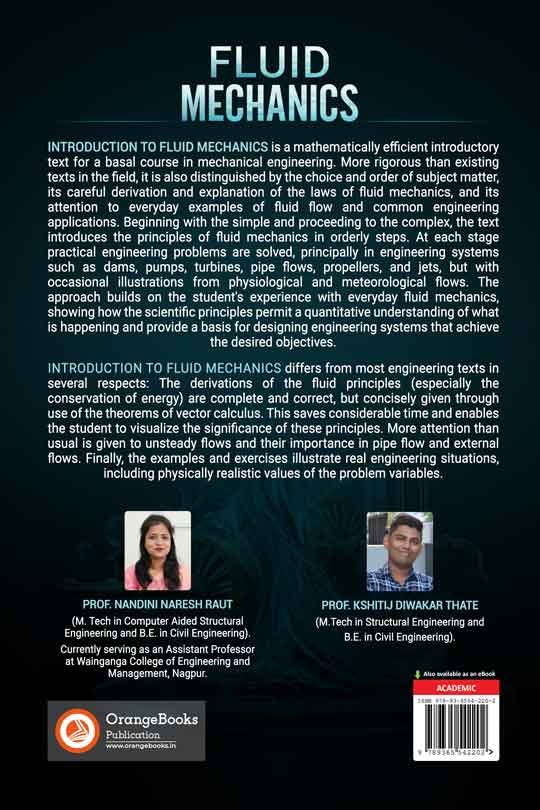
Introduction to Fluid Mechanics is a mathematically efficient introductory text for a basal course in mechanical engineering. More rigorous than existing texts in the field, it is also distinguished by the choice and order of subject matter, its careful derivation and explanation of the laws of fluid mechanics, and its attention to everyday examples of fluid flow and common engineering applications. Beginning with the simple and proceeding to the complex, the text introduces the principles of fluid mechanics in orderly steps. At each stage practical engineering problems are solved, principally in engineering systems such as dams, pumps, turbines, pipe flows, propellers, and jets, but with occasional illustrations from physiological and meteorological flows. The approach builds on the student’s experience with everyday fluid mechanics, showing how the scientific principles permit a quantitative understanding of what is happening and provide a basis for designing engineering systems that achieve the desired objectives. Introduction to Fluid Mechanics differs from most engineering texts in several respects: The derivations of the fluid principles (especially the conservation of energy) are complete and correct, but concisely given through use of the theorems of vector calculus. This saves considerable time and enables the student to visualize the significance of these principles. More attention than usual is given to unsteady flows and their importance in pipe flow and external flows. Finally, the examples and exercises illustrate real engineering situations, including physically realistic values of the problem variables.

Book Details

Available Format

Paperback Print

ISBN

9789365542202

Language

English

Page Count

156

Published Year

2025

Size

6×9 in

Author

Prof. Kshitij Diwakar Thate,

Prof. Nandini Naresh Raut

Publisher

OrangeBooks Publication

Reviews

Reviews

There are no reviews yet.

Be the first to review “Fluid Mechanics”