


Description
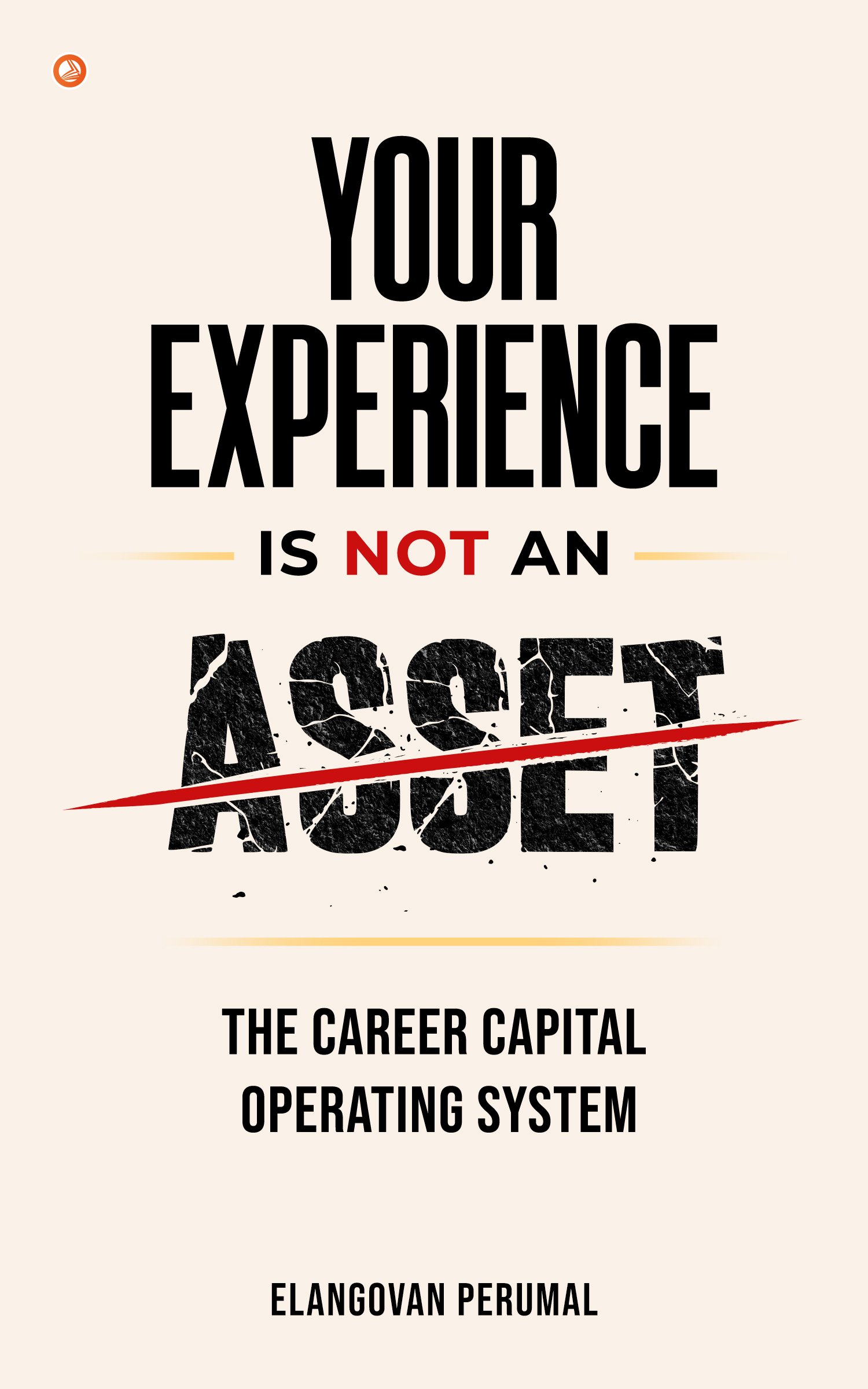
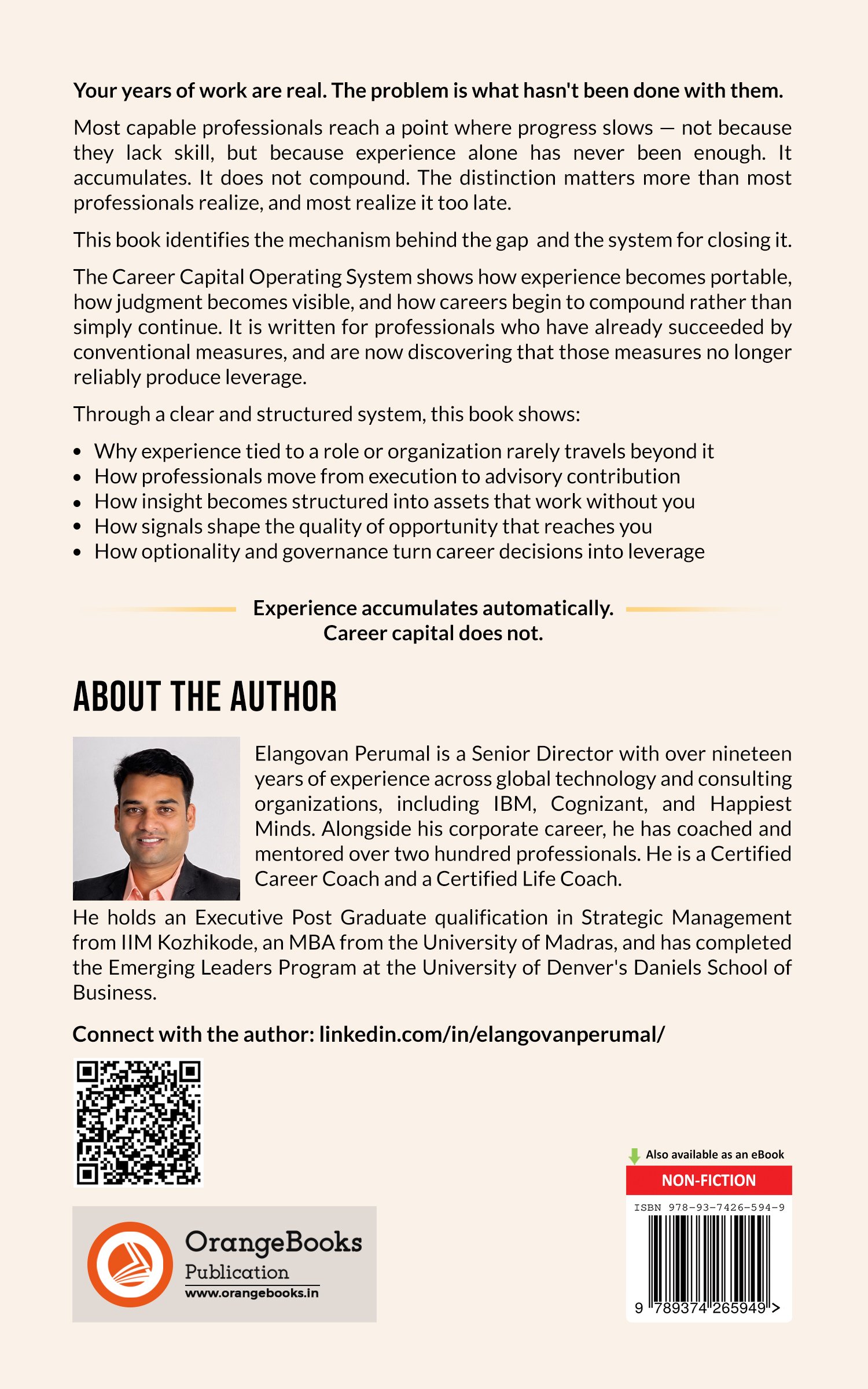
SYNOPSIS Your Experience Is Not an Asset A System to Expose What Your Experience Is Really Worth—and Turn It into Career Capital Most professionals believe that experience compounds over time. The assumption feels intuitive. The more you work, the more valuable you become. Years accumulate, responsibilities increase, and careers appear to progress. The reality is different. Experience accumulates. It does not automatically become an asset. Across industries, capable professionals reach a point where progress slows. They have more experience than ever before, yet their influence does not increase proportionally. Their opportunities become narrower, not broader. Their work becomes more complex, but not more valuable. The issue is not effort or intelligence. It is conversion. This book challenges a widely accepted belief about careers: that experience, by itself, creates value. It argues that experience becomes valuable only when it is converted into career capital—assets that improve decision-making, signal capability, and create leverage over time. The book introduces a structured way to understand this conversion. It begins by examining what most professionals misunderstand about experience. Work often rewards execution and efficiency, but these do not necessarily translate into higher-value contribution. Many careers plateau not because of lack of skill, but because individuals remain at the same level of value creation for too long. The book then addresses the central problem: why experience fails to translate into leverage. It shows that experience must be examined, structured, and articulated before it becomes reusable. When this happens, experience moves from being a record of past work to a set of assets that can be applied across situations. From there, the book explores how these assets become visible. Signals—through decisions, communication, and reputation—shape how others interpret capability. These interpretations influence access to opportunities, which in turn determine the range of choices available to a professional. This leads to the concept of optionality. Careers that compound are not defined by a single path, but by the ability to choose among multiple credible paths. Optionality is not created by keeping choices open, but by building assets that make different paths viable. The book also examines the role of emerging technologies, particularly AI, in this context. Rather than treating AI as a toolset, it positions it as an amplifier. Professionals with clear thinking and structured experience benefit disproportionately, while those without it experience increased noise rather than increased leverage. Finally, the book introduces the idea of career governance. Careers do not fail only because of lack of opportunity or capability; they drift. Governance is the process of directing accumulated career capital over time—ensuring that decisions reinforce long-term value rather than fragment it. Taken together, these ideas form a system. Careers stop behaving like linear progressions and begin to behave like compounding systems when experience is consistently converted into assets, those assets are made visible, and decisions are governed with intention. This is not a book about learning new skills or following prescribed career paths. It is a book about seeing differently—about recognizing what is already present in one’s experience, and understanding how to convert it into something that creates sustained value. The central question it raises is simple. Not how much experience you have. But what your experience has become.



Reviews
There are no reviews yet.